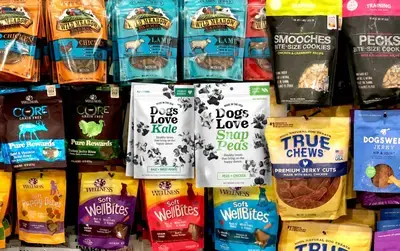
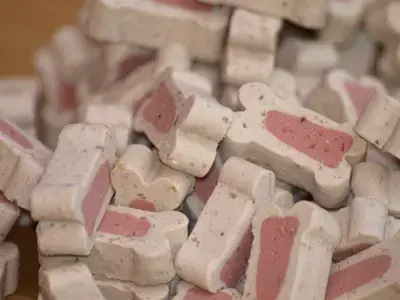
Treats are one of the easiest ways to bond with your dog, but not all of them are good for it. The healthiest treats are made from simple, recognizable ingredients and fed in moderation.
The single most important rule is the 10 percent rule, which keeps treats from crowding out balanced meals. This guide covers what makes a treat healthy, what to avoid, and the best options for training, dental care, special diets, and homemade rewards.
How Many Treats Can a Dog Have a Day
The rule of thumb is simple. Treats should make up no more than 10 percent of your dog’s daily calories, with the other 90 percent coming from balanced meals.
For a small dog that can mean just a couple of small treats, while a large dog has more room. The exact number depends on the treat’s calories and your dog’s size and activity level.
You can give treats every day as long as you stay within that budget. The trick is to use small pieces, since most dogs care more about the reward than the size.
What Makes a Dog Treat Healthy
Healthy treats start with a short, readable ingredient list. Look for a named protein first, like chicken, beef, or salmon, rather than a vague term like meat by-product.
Whole foods are a good sign, so ingredients you recognize from your own kitchen usually beat a long line of chemicals. Limited-ingredient treats are especially useful for dogs with sensitivities.
Single-ingredient treats are the gold standard for simplicity. Freeze-dried meat, dehydrated sweet potato, and plain pumpkin all deliver flavor without fillers.
Ingredients to Avoid in Dog Treats
A few ingredients are worth skipping. Artificial preservatives like BHA, BHT, and ethoxyquin show up in cheaper treats, and many owners prefer to avoid them, which is the focus of our guide to dog treats without BHA.
Added sugar and corn syrup pile on empty calories and can worsen weight and dental problems. Our roundup of sugar-free dog treats covers better options.
Excess salt, artificial dyes, and vague by-products round out the list. For a fuller look at what to steer clear of, see our guide to bad dog treats and the ingredients that make them a poor choice.
Best Treats by Type
The right treat often depends on the job. For training, you want small, low-calorie pieces you can hand out quickly, like the picks in our tiny dog treats guide.
For fresher breath and cleaner teeth, dental treats do double duty. Our roundup of the best dog breath treats leans on options that help scrape plaque while your dog chews.

Meaty, high-value rewards like jerky treats and freeze-dried liver work well for picky or hard-to-motivate dogs. Dehydrated treats offer a similar punch with a longer shelf life.
Treats for Dogs With Special Diets
Dogs with health needs can still enjoy treats, as long as the treat fits the diet. For itchy or food-sensitive dogs, a hypoallergenic dog treat built on a single novel protein keeps triggers out.
Sensitive stomachs do better with gentle, easy-to-digest options, which we cover in our dog treats for sensitive stomachs guide. Overweight dogs benefit from the lighter picks in our low-fat dog treats roundup.
For dogs managing diabetes, low-sugar options matter, and our diabetic dog treats guide explains what to look for. Dogs with kidney disease need lower minerals, the focus of our low-phosphorus dog treats picks.
Aging dogs with stiff joints can get support from treats with glucosamine and chondroitin. If grains are a concern, our best grain-free dog treats guide rounds up solid choices.
One caution applies across the board. Always check with your vet before adding treats for a dog with a medical condition.
Homemade Dog Treats
Making treats at home gives you full control over the ingredients. Most recipes start with a dog-safe flour, and our guide to the best flour for dog treats compares the options.
Simple, wholesome recipes are easy to pull off. Favorites include oatmeal treats, apple treats, and liver treats, all built on a handful of ingredients.
For something heartier, cheese treats and chicken and sweet potato treats are reliable crowd-pleasers. Homemade also lets you skip the preservatives and sugar found in some store brands.
Healthy Human Foods as Treats
Plenty of everyday foods make great low-calorie treats. Crunchy vegetables like carrots, green beans, and cucumber are hydrating and easy on the waistline.
Many fruits work too, including blueberries, banana, and small pieces of apple with the seeds removed. Plain, cooked lean meats are another easy, high-value option.
A few foods are strictly off-limits, so this is worth memorizing. Grapes, raisins, onions, garlic, chocolate, and anything with xylitol are toxic and should never be given.
Storing Treats and Shelf Life
Treats last longer when you store them well. Keep them in an airtight container away from heat and light, and check the label for a best-by date.
Soft and homemade treats spoil faster than dry, processed ones. For the details on how long different treats keep, see our guide to how long dog treats are good for after expiration.
Which Treats Do Vets Recommend
Most vets favor simple, single-ingredient treats and well-known brands with strong quality control. Freeze-dried meats, dental chews carrying the Veterinary Oral Health Council seal, and plain vegetables come up often.
They also stress moderation over any specific brand. A treat that fits the 10 percent rule and suits your dog’s health is usually the right one, and your vet can tailor that advice to your dog.
Sources and Further Reading
These resources go deeper on treat safety and feeding.
- The Best Dog Treats, PetMD
- How Many Treats Can My Dog Have, American Kennel Club
- Veterinary Oral Health Council Accepted Products
Frequently Asked Questions
The healthiest treats are single-ingredient or limited-ingredient options made from whole foods, like freeze-dried meat, dehydrated sweet potato, or plain pumpkin. They name a real protein first and skip artificial preservatives, added sugar, and fillers. Simple and recognizable beats a long ingredient list.
Treats should make up no more than 10 percent of your dog's daily calories, with the rest coming from balanced meals. For a small dog that may be only a couple of small pieces, while a large dog has more room. Using tiny pieces lets you reward often without going over.
Low-calorie, single-ingredient treats are fine daily as long as you stay within the 10 percent rule. Good everyday options include small pieces of carrot, green beans, blueberries, or a bit of freeze-dried meat. Rotate them so meals stay the main source of nutrition.
Vets tend to favor simple, single-ingredient treats and established brands with strong quality control. For dental treats, they often point to products carrying the Veterinary Oral Health Council seal. Most importantly, they stress moderation over any one brand.
Carrots, green beans, cucumber, blueberries, banana, and plain cooked lean meat all make healthy, low-calorie treats. Avoid grapes, raisins, onions, garlic, chocolate, and anything with xylitol, which are toxic to dogs. Introduce any new food in small amounts.
Not automatically. Grain-free treats only help if your dog has a diagnosed grain sensitivity, which is uncommon. For most dogs the bigger factors are calorie count, protein quality, and avoiding junk additives.